

It’s not everyday that most of us are buying or formulating clams and mussels. Maybe you’re intending on doing a Banquet of the Seven Fishes or want to prepare a timeless cioppino.
No matter the meal, it can be intimidating to cook clams and mussels, specifically the very first time around. From the different types of clams and mussels you might encounter at the shop, to how to prepare with each, we’ll break down how these mollusks are both similar and various, and what to learn about them before you get cooking.
Erin T. Spencer is a marine ecologist and science author who is passionate about sharing inspiring stories of marine preservation. As a National Geographic Explorer, she’s taken a trip from Florida to Fiji to find out how neighborhoods can collaborate to safeguard our oceans’ fisheries. Discover more about her work at erintspencer.com.
How Clams And Mussels Are Similar
Both clams and mussels are bivalve mollusks (along with oysters and scallops) that have two-part hinged shells and a soft body. They are both filter feeders, implying they survive on nutrients they glean from the moving water they filter through their gills.
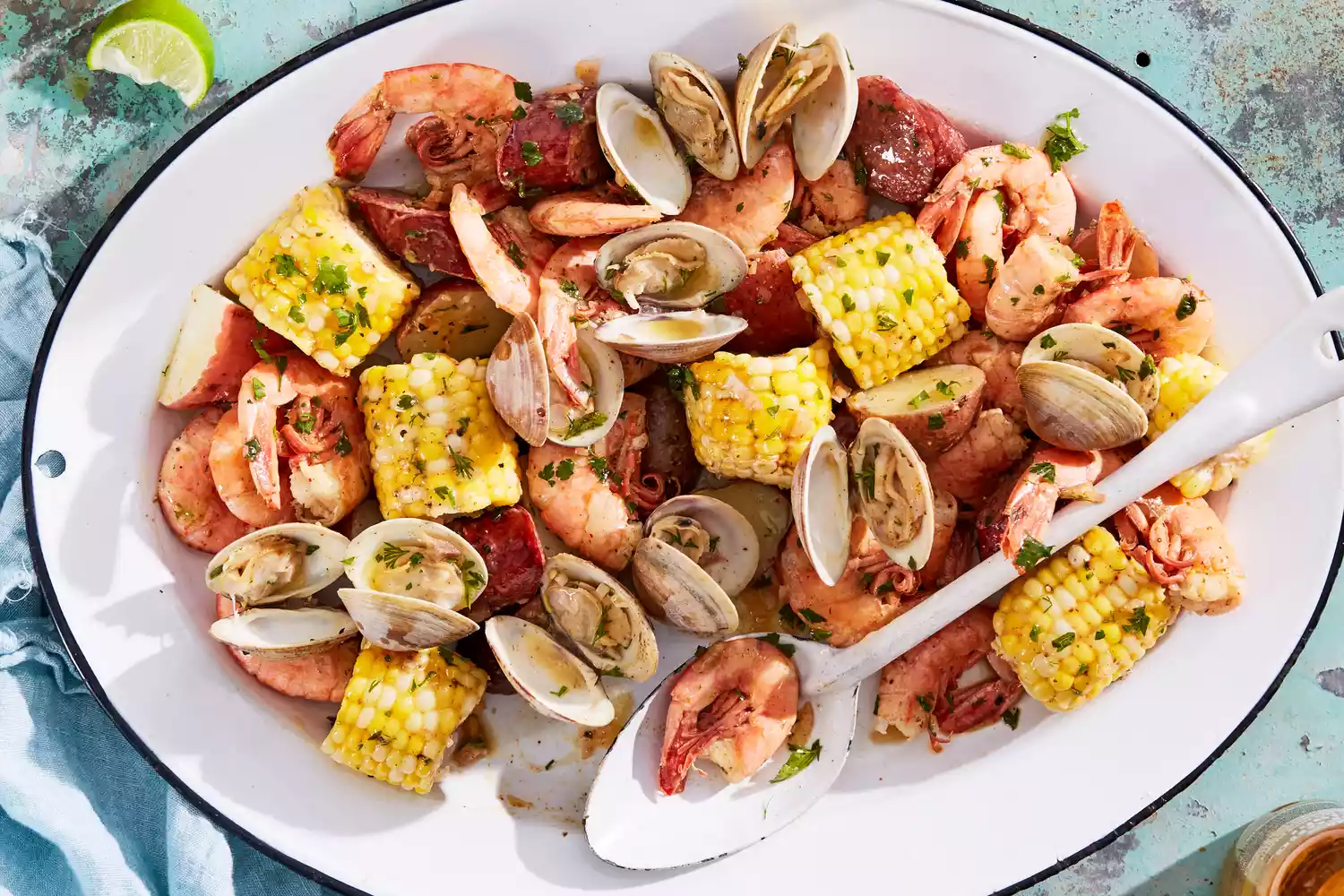
They’re both sustainable food options (more on that listed below) and can both grow in fresh or saltwater, with the specific environment they’re raised in adding to their flavor. Both cook quite quickly and will pop open when fully cooked and all set to eat. (Any clams or mussels that don’t open up should be disposed of. Same with any that are already open before cooking.).
How Clams And Mussels Are Different.
The greatest differences in between the 2 boils down to taste and texture: Mussels have a creamier, tender texture in contrast to clams that have a little more chew to them. That stated, if mussels, or clams for that matter, are overcooked they’ll both be incredibly chewy and rubbery.
As for taste, normally mussels are milder and less briny than clams, which have a stronger seafood taste. They also look really different aesthetically, which we’ll enter into below.
How To Tell Them Apart.
Do not feel bad if you have a hard time to figure out between clams and mussels. When you know what to try to find, it’s simple to tell them apart (although you can constantly ask the fishmonger, if ever in doubt).
” Most clams have oval-shaped shells (the razor clams have longer, more rectangle-shaped shells) that can be tan, brown, or white in color. Mussels have much darker shells, more like a brown or black, and can have a blue-purple shine to their shells. Their shells are more teardrop-shaped when compared to clams,” says Erin T. Spencer, marine ecologist and science writer.
Another visual distinction is that mussels have a bundle of thin fibers that protrude from their shell that they utilize to stay with rocks or other mussels. These fibers are referred to as beards. Numerous farmed mussels included them currently got rid of, however if you acquire mussels with the beards still connected, it’s simple to pull them off and dispose of.
Types of Clams.
These are a few of the common sort of clams you’re most likely to experience at your local fish market.
Cleaners.
You’ll typically see these sweet, tender clams on dining establishment menus identified “steamers,” however they can likewise be called soft shell clams. As the name implies, they’re delicious steamed and served with butter (although honestly, most clams are), and they have a more breakable shell compared to other varieties, for this reason the soft shell moniker, so they must be managed with care.
Manila.
These clams are small, soft, sweet, and have a light briny flavor. Know that when looking for them in shop, Manila clam shells vary in color from white to yellow, brown, or gray, with concentric rings and lines running throughout them.
Quahogs.
Called tough clams or hard-shell clams, quahog is the umbrella term that encompasses a large size range of clams discovered from Florida to Canada that can grow up to about 6 inches. A couple of common varieties are countneck, littleneck, topneck, cherrystone, and chowder, and they are named according to size. They’re flexible in terms of cooking, and have a mild, sweet taste with a pleasantly briny taste.
Razors.
Razor clams are long, narrow, saltwater clams that are formed like a closed straight razor, for this reason the name. There are numerous kinds of razor clams, but Pacific razors are one popular range. In terms of preparation, you’ll typically see them fried or used in chowders.
” The most commonly-known types, razor clams are belonging to estuaries of China and Japan and, according to Monterey Bay Seafood Watch, are among the top five most important bivalve aquaculture types,” says Spencer.
Types of Mussels.
When shopping for mussels, use this guide to help you comprehend the varieties typically found in the seafood case.
Blue.
Tender and sweet, these mussels originate from tidal locations or offshore, mainly from New England, Washington, and California, and are the most widely taken in mussels in North America. They can be delighted in a range of ways, from steamed to baked.
” Found on the East and West Coasts, these little guys can mature to 8 inches. They can also be called PEI mussels if collected from Prince Edward Island. They’ll have black or brown shells with blue-purple colors,” states Spencer.
Mediterranean.
These mussels, as the name alludes, are from the Mediterranean and Atlantic coast of Europe. Moderate with a company texture, you’ll see them smoked, broiled, and steamed, however it’s worth noting that the range has been presented in other parts of the world and is considered intrusive in a lot of those areas. They’re even listed as one of the top 100 worst invasive species by the International Union for Conservation of Nature. These mussels look extremely similar to blue mussels, however are usually bigger. Their shells can be a deep blue color, brown, or almost black.
New Zealand Green-Lipped.
Larger than blue mussels, these get their name from the green “lips” around the edges of their shells. They’re likewise just called New Zealand mussels. Plump, juicy, and sweet, serve them steamed, in pasta, or stuffed and baked.
Seafood Watch.
Spencer suggests visiting the sustainable seafood guide from Monterey Bay Aquarium called Seafood Watch. The resource has actually a color-coded scale to sustainable seafood alternatives, from salmon to mollusks. Any seafood labeled green implies it’s a terrific sustainable choice, with yellow showing an excellent option, and red labels signifying that seafood that’s need to be avoided.
The bright side is that “bivalves like clams and mussels are thought about a few of the most sustainable seafood choices you can purchase,” states Spencer.
Wild vs. Farmed.
” Wild caught bivalves can be dug by hand or dug up, while farmed ones can be grown on the sea floor or suspended in the water column in protective bags or on longlines,” states Spencer.
The majority of clams and mussels you’ll discover in stores are farmed. As Spencer notes, about 90 percent of the worldwide bivalve production is farmed, according to Monterey Bay Seafood Watch.
While a valid concern with farmed seafood is what is used as feed, bivalves, which are filter feeders that extract nutrients out of moving water, do not need an extra food supply that might contain less than perfect ingredients. Plus, “as they filter their food, they’re making the water cleaner!” she says.
Can You Substitute Clams for Mussels in Cooking, and Vice Versa?
The response to this question is highly recipe specific. Clams and mussels are typically used in combination in meals, and can be similarly steamed in abundant bathes of gewurztraminer and fresh herbs, but they do prepare at various rates, specifically depending upon size, and might not be a suitable one-for-one swap depending upon the dish.
In a fish stew, for example, if clams aren’t available, mussels would be a fine substitute (although they will impart a different taste). While the mussels may cook at a different rate than the clams, thankfully it’s simple to inform when they’re done: they’ll pop right open.